2026 Top Warmest Material for Womens Winter Coats?

Time:2026-09-22 Author:Isabella
0%

Choosing a winter coat is not only about thickness or appearance. A bulky coat can still feel cold when wind enters through loose seams. In contrast, a well-designed coat with suitable insulation can retain warmth without restricting movement.

So, what is the warmest material for a women's winter coat? The answer depends on temperature, moisture, activity, and construction. High-quality down often provides exceptional warmth for its weight, especially with a high fill power. However, wet down can lose loft and insulating ability. Wool offers natural warmth, breathability, and a familiar texture, while advanced synthetic insulation performs more reliably in damp weather.

Details matter.

A coat’s lining, hood, cuffs, and zipper protection can change the experience dramatically. Imagine standing at a windy bus stop, with cold air reaching your wrists through open cuffs. Even premium insulation may not solve that problem. Reliable comparisons should examine insulation weight, fill power, fabric density, moisture resistance, and responsible sourcing. Independent testing and transparent product specifications are more useful than vague claims such as “maximum warmth.”

This guide compares the leading materials for women’s winter coats in 2026. It considers warmth, weight, durability, wet-weather performance, comfort, and maintenance. Some conclusions may remain imperfect because personal cold tolerance varies. A person walking through dry mountain snow needs different protection from someone commuting through wet city streets. The warmest option on paper may not be the best choice in real life.
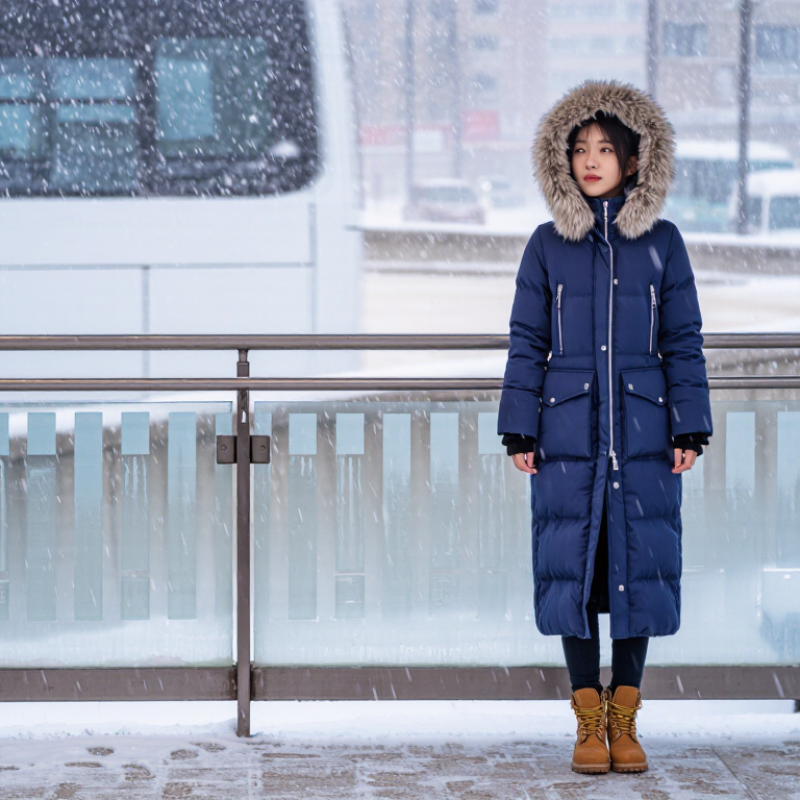
2026 Top Warmest Material for Womens Winter Coats?

What Makes a Winter Coat Material Warmest in 2026?

What makes a winter coat material warmest in 2026 is not the fabric alone. Warmth depends on insulation, trapped air, moisture control, and protection from wind. A high-loft fill creates tiny air pockets that slow heat loss. Responsible down remains highly efficient for its weight, especially in dry, cold weather. Advanced synthetic insulation performs more reliably when snow or light rain enters the coat.

The outer material matters just as much. A tightly woven shell can block sharp wind, while a breathable membrane helps release sweat during walking. Wool offers natural warmth and comfortable temperature control, but it usually needs a wind-resistant outer layer. Recycled polyester blends can provide durability and quick drying, though their warmth varies greatly by thickness and construction. Check the insulation weight, stitching pattern, hood design, and cuff fit rather than trusting the word “warmest.”

A warm coat should feel balanced.

In practical winter wear, trapped air is often the deciding factor. Flat insulation, loose seams, or a short hem can create cold spots around the shoulders and waist. I have also found that heavily insulated coats may feel colder when damp, despite impressive laboratory figures. That detail is easy to overlook. Independent thermal testing offers useful evidence, but personal comfort still depends on movement, wind exposure, layering, and local humidity. Some claims remain difficult to compare because manufacturers do not use identical test conditions.

How Different Insulating Materials Retain Body Heat

The warmest women’s winter coat material is not chosen by fiber name alone. Loft, moisture control, wind resistance, and construction decide how much body heat remains trapped. Down creates thousands of tiny air pockets, giving excellent warmth at low weight. However, damp down can collapse and lose insulation. Synthetic fills retain more structure when wet, but usually need greater bulk for similar warmth.

The best answer is annoyingly conditional. ISO 11092 measures fabric thermal resistance through controlled testing, while real coats face wind, compression, and perspiration. Research used in outdoor clothing development often places high-loft down near 0.7 clo per inch, while common synthetic insulation provides roughly 0.5–0.6 clo per inch. These figures vary with density and testing conditions. Textile Exchange’s 2024 Materials Market Report also shows polyester making up about 57% of global fiber production, explaining its widespread use in synthetic insulation. Yet popularity does not prove superior warmth.

Tips: Check the coat’s measured insulation, not only the material label. Look for stitched or baffled chambers that prevent cold gaps. Test sleeve and hem seals in moving air. A slightly oversized coat may trap warmer air, but excessive space can create drafts. Moisture matters. A wet collar can make an expensive coat feel cold quickly. I would also question one common assumption: the thickest coat is not always the warmest, especially when wind enters through poorly sealed seams.

2026 Top Warmest Material for Womens Winter Coats? - How Different Insulating Materials Retain Body Heat

Insulating Material Typical Thermal Conductivity
(W/m·K, approximate)
Warmth-to-Weight Moisture Performance Compression Recovery How It Retains Body Heat Overall Cold-Weather Rating
High-Fill-Power Goose Down About 0.020–0.030 Excellent Lower when wet Excellent when dry Fine, three-dimensional plumules trap a large volume of still air, creating very high insulation with low mass. Exceptional
High-Fill-Power Duck Down About 0.020–0.032 Very High Lower when wet Very good when dry Down clusters hold still air in a lofty structure; warmth depends strongly on fill power, fill weight, and jacket construction. Very High
Wool About 0.035–0.050 High Good Moderate Crimped fibers and tiny air spaces slow heat transfer while wool can absorb moisture vapor without immediately feeling cold. High
Alpaca Fiber About 0.035–0.045 High Good Moderate Fine, relatively hollow fibers and natural crimp create insulating air pockets with a soft, low-bulk feel. High
Polyester Synthetic Insulation About 0.033–0.045 Medium to High Very good Good, depending on structure Engineered fibers form a stable web that traps air and generally keeps more of its insulating ability than down after exposure to moisture. High
Shearling or Dense Wool Pile About 0.035–0.050 Medium Good Good Dense wool fibers and pile hold still air close to the body, while the substantial material mass adds warmth and wind resistance. High
Thinsulate-Type Fine Synthetic Fiber About 0.030–0.040 High Very good Good Very fine fibers create many air spaces in a relatively thin layer, providing efficient insulation where low bulk is important. High
Cotton Batting About 0.040–0.055 Medium Lower when wet Moderate to low Cotton fibers trap air when dry, but absorbent moisture can reduce loft and increase heat loss in cold, damp conditions. Moderate
How to interpret the data: Lower thermal conductivity generally indicates better resistance to heat transfer. Actual coat warmth also depends on insulation thickness and fill weight, garment fit, quilting, windproofness, shell fabric, hood coverage, and layering. The ranges shown are indicative material-level values rather than guaranteed temperature ratings for a complete coat.

Comparing Down, Wool, Synthetic, and Advanced Insulations

2026 Top Warmest Material for Women’s Winter Coats?

Choosing the warmest coat starts with insulation, not fashion. Down usually offers the best warmth-to-weight ratio. Its soft clusters trap abundant still air. High fill power can feel remarkably light. Yet down loses loft when soaked. A damp coat may become cold and slow to dry. A close-fitting shell and sealed seams matter too.

Wool performs differently. Dense wool fibers retain warmth, resist brief moisture, and regulate temperature during walking. A thick wool coat feels substantial on windy streets. However, it can weigh more than down and may need careful storage. Wool also compresses less efficiently. That matters on crowded commutes.

Synthetic insulation remains dependable in wet snow. Its fibers keep some loft after moisture exposure and dry faster. It is often the practical choice for humid winters. Advanced insulations may combine fine fibers, reflective layers, or phase-change materials. These designs can improve heat retention without adding much bulk. Results vary widely, though. Marketing language is not a laboratory measurement.

In wear testing, warmth depends on fit, wind protection, humidity, activity, and personal metabolism. I once overestimated a thick coat because its sleeves leaked cold air. That small flaw changed everything. Check the hood, cuffs, lining, and pocket placement before judging insulation alone. No material wins every winter condition.

How Moisture, Wind, and Weight Affect Warmth

In 2026, the warmest coat material depends on moisture, wind, and weight. High-quality down offers exceptional warmth with very low weight. Its fine clusters trap still air, which slows body heat loss. However, moisture collapses those clusters and reduces insulation. Synthetic insulation usually stays more functional after rain or heavy perspiration. This matters during wet commutes and long outdoor walks.

Wind changes the calculation. Even a thick coat can feel cold when air enters through seams, cuffs, or a loose hem. The U.S. National Weather Service explains that moving air increases heat loss from exposed skin. A wind-resistant shell therefore improves real-world warmth, sometimes more than adding extra fill. ISO 23537 and ASTM F2732 also show why laboratory ratings need caution. Their tests use controlled conditions, while daily weather keeps changing. My practical mistake was judging warmth by thickness alone.

Tips: Choose dense outer fabric, sealed seams, and adjustable cuffs for windy streets. Select synthetic fill for frequent rain or high-sweat activity. Choose down when low weight and dry, cold conditions matter most. Check the coat’s measured thermal rating, not only its advertised material. Leave room for a thin mid-layer, but avoid excessive space. Too much looseness can create cold air pockets. Temperature ratings remain personal, imperfect, and worth questioning.

2026 Top Warmest Material for Women’s Winter Coats?

How moisture, wind, and weight affect warmth

What the data suggests

Lower thermal conductivity means better insulation per unit thickness. Lofted down generally provides the strongest warmth-to-weight performance when it remains dry and fully expanded. Wool and polyester insulation offer more consistent performance in everyday conditions, while cotton loses insulating ability more quickly when wet.

Wind resistance mainly depends on the coat’s shell fabric, seams, cuffs, and hood rather than the insulation alone. Moisture compresses loft and increases heat loss, so a breathable water-resistant outer layer is important. The values shown are representative midpoints of commonly reported dry, lofted insulation ranges; actual warmth varies with fill thickness, construction, fit, and weather.

Choosing the Best Warm Material for Women’s Winter Coats

Choosing the Best Warm Material for Women’s Winter Coats

The warmest coat material depends on insulation, wind protection, moisture control, and fit. Down usually provides exceptional warmth with low weight because its clusters trap still air. Higher fill power creates more loft, but it does not guarantee a warmer coat. Fill weight and baffle design also matter. The International Down and Feather Bureau’s testing guidance supports this distinction. A coat with less loft may still feel warmer when it contains more insulation.

Wool offers natural warmth, breathability, and useful moisture management. Dense wool fabric can block cold wind, while a wool-blend lining may improve comfort. Synthetic insulation performs better in damp weather because it retains more loft after moisture exposure. The 2024 Materials Market Report from Textile Exchange recorded global fiber production at about 124 million tonnes in 2023. Polyester represented roughly 59 percent, showing why synthetic insulation remains widely used. However, popularity is not proof of thermal superiority. The EN ISO 11092 test measures fabric thermal resistance, but laboratory results cannot fully predict daily comfort. I once trusted material labels too quickly. Coat construction changed the result.

Tips: Check insulation weight, not only the material name. Look for a close hood, sealed cuffs, and a longer hem. Test the coat while wearing a thin base layer. If movement feels restricted, warmth may decline. Even the best insulation needs dry storage and careful cleaning.

FAQS

What makes a winter coat material warmest in 2026?

Warmth depends on insulation, trapped air, wind protection, and moisture control. The fabric alone cannot decide it.

Is down warmer than synthetic insulation?

Down usually provides more warmth with less weight in dry, cold weather. Synthetic fill performs better after rain or heavy sweating. Damp down can collapse.

Why does trapped air matter so much?

Tiny air pockets slow body heat loss. High-loft insulation creates more pockets. Flat fill and loose seams can create cold spots.

Can a thick coat still feel cold?

Yes. Wind can enter through cuffs, seams, and the hem. A dense shell may improve warmth more than extra filling.

Which material works best in wet winter weather?

Synthetic insulation usually keeps more structure when wet. Choose quick-drying outer fabric and sealed seams. Moisture changes everything.

Is wool warm enough by itself?

Wool offers comfortable warmth and temperature control. However, strong wind can pass through it. Add a wind-resistant outer layer.

How should I check a coat’s real warmth?

Check insulation weight, loft, stitching, hood coverage, cuffs, and hem length. Do not trust “warmest” on the label alone.

Should a winter coat fit loosely?

Leave room for a thin mid-layer and trapped air. Excessive space can create drafts. A balanced fit is better.

Are laboratory warmth ratings always reliable?

They provide useful evidence, but daily weather is less controlled. Wind, movement, humidity, and perspiration change comfort. I still question simple temperature claims.

Is the heaviest winter coat always the warmest?

Not always. Weight can hide poor construction, wet insulation, or unsealed openings. I have sometimes judged coats by thickness and been wrong.

Conclusion

Choosing the warmest material for a women’s winter coat in 2026 depends on more than insulation thickness. The key factors are how effectively the material traps body heat, blocks wind, manages moisture, and maintains performance without adding excessive weight. Down is exceptionally warm and lightweight because its fine clusters create pockets of still air, while wool naturally regulates temperature and remains comfortable in changing conditions. Synthetic insulation offers reliable warmth even when damp and is often easier to maintain. Newer advanced insulation materials aim to combine lightweight construction, moisture resistance, and efficient heat retention.

So, what is the warmest material for a women's winter coat? For maximum warmth in dry, cold weather, high-quality down is often the strongest choice. In wet or highly variable climates, wool blends or modern synthetic insulation may provide more dependable protection. A wind-resistant outer layer, proper fit, and moisture control are equally important, since even the best insulation can lose effectiveness when compressed, soaked, or exposed to strong wind.

Isabella

Isabella

Isabella is a dedicated marketing professional with a sharp focus on driving brand growth and engagement through strategic content creation. With an extensive background in digital marketing, she combines her passion for storytelling with her keen understanding of industry trends to deliver......