5 Best Ways to Make a Puffer Jacket Fluffy Again?

Time:2026-10-17 Author:Liam
0%

A puffer jacket should feel light, rounded, and springy after cleaning. Instead, it may return from the washer looking flat, lumpy, or strangely thin. Many owners ask, “why do puffer jackets lose their fluffiness after washing?” The short answer involves moisture, movement, and trapped filling. Down clusters can stick together when wet. Synthetic insulation can also compress inside narrow baffles. If the jacket is removed too soon, damp pockets may stay hidden near the seams.

Laundry expert Patric Richardson puts the drying process simply: “Dry it until it is completely dry.” That advice sounds obvious. It is often ignored. A jacket may feel dry on the outside while the inner filling remains cool and clumped. Low heat, repeated tumbling, and clean dryer balls can help separate those clusters without crushing the fabric. However, excessive heat can damage delicate shells, coatings, or synthetic fibers. Always check the care label before adjusting the method.

This guide explores five practical ways to make a puffer jacket fluffy again, from controlled drying to gentle hand reshaping. You will see why patience matters, especially when thick baffles hold moisture for hours. I have also included details that are easy to miss, such as shaking the jacket between drying cycles and checking cold spots near the collar. Not every flattened jacket can return to its original loft. That is the uncomfortable part. Still, careful treatment often restores surprising volume without replacing the garment.
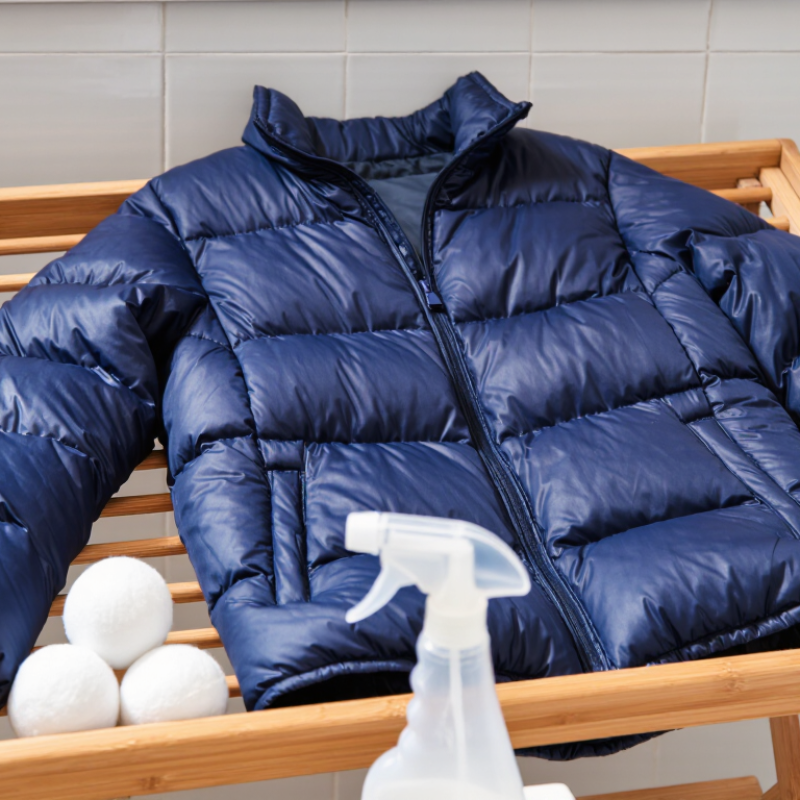
5 Best Ways to Make a Puffer Jacket Fluffy Again?

Assess the Causes of a Flattened Puffer Jacket

A puffer jacket becomes flat for several practical reasons. Moisture is a common culprit. Down clusters lose loft when damp, trapping less air between their fibers. The International Down and Feather Bureau measures fill power in cubic inches per ounce, and higher fill power means more potential volume. It does not guarantee lasting fluffiness. Repeated compression also breaks up the jacket’s air pockets. A packed jacket may stay folded for weeks. Body oils, dust, and detergent residue can make the filling clump. Synthetic insulation can flatten too, although it usually responds differently to washing.

Age matters as well. Textile Exchange’s 2024 Materials Market Report records global fiber production at 124 million tonnes in 2023, showing how widely synthetic fibers are used. Yet fiber quantity alone does not explain warmth. Stitching, shell fabric, moisture, and cleaning habits all affect loft. A jacket may look flat because its filling shifted into narrow channels. That is not always a washing problem. I have also seen jackets lose volume after drying beside direct heat. The outside felt dry, while the interior stayed uneven.

Tips: Check the care label before washing. Use a gentle, low-residue cleaner. Dry slowly with clean dryer balls, stopping often to shake and separate clumps. Never store the jacket compressed. If damp spots remain, continue drying. A careful repair specialist should inspect torn chambers or leaking filling. Even experienced owners can misjudge dryness.

Prepare the Jacket and Choose a Safe Cleaning Method

5 Best Ways to Make a Puffer Jacket Fluffy Again?

Prepare the Jacket and Choose a Safe Cleaning Method

Before cleaning, read the care label carefully. It is the most reliable guide for the jacket’s fabric and filling. Empty every pocket, remove detachable parts, and close all zippers. Inspect seams for loose threads or small tears. Repair damage before washing. Water can worsen weak areas.

I once rushed this step and discovered a tissue inside the pocket. The cleanup took longer than expected.

Brush off loose dirt with a soft garment brush. Treat oily spots with a small amount of mild liquid detergent and cool water. Avoid bleach, fabric softener, and strong stain removers. They may weaken the shell or coat the filling.

For washable jackets, use a large front-loading machine with cool water. Select a gentle cycle and add a down-safe or mild detergent. An overloaded drum cannot clean or rinse evenly.

Hand washing is possible, but never twist or wring the jacket. Press out water gently instead. Run an extra rinse if the jacket feels slippery. This detail is easy to miss.

Dry the jacket on low heat with clean dryer balls. Pause every twenty minutes and shake apart damp clumps by hand. It may need several cycles. Do not store it while any section feels cool or heavy. Incomplete drying can cause odors and uneven insulation. Patience matters here.

Wash the Jacket Without Damaging Its Insulation

5 Best Ways to Make a Puffer Jacket Fluffy Again?

Wash the Jacket Without Damaging Its Insulation

A flat puffer jacket often needs careful washing, not aggressive shaking. Check the care label, then close every zipper and empty each pocket. Use a front-loading machine on a gentle, cool cycle. Avoid overloaded drums. The insulation needs room to move freely. Use a small amount of mild liquid detergent, and skip bleach and fabric softener. They can leave residue between the fibers.

Add an extra rinse cycle. It removes detergent trapped inside the filling. The International Down and Feather Bureau stresses cleanliness and complete drying for better loft retention. ENERGY STAR reports that certified clothes washers use about 20% less energy and 30% less water than standard models. A gentle machine cycle can therefore protect both insulation and resources. Still, water savings should not mean a rushed rinse.

Drying decides the final shape. Tumble dry on low heat with two clean dryer balls. Pause every 20 minutes, remove the jacket, and gently break apart damp clumps by hand. Never store it while moisture remains. That mistake creates a cold, compressed center. Air drying alone may seem safer, but it can leave hidden dampness inside. I sometimes stop too early because the shell feels dry. That is unreliable. Check the cuffs, collar, and thickest panels again. A final low-temperature tumble often restores the missing loft.

Dry and Fluff the Filling with Proper Techniques

5 Best Ways to Make a Puffer Jacket Fluffy Again?

A flat puffer jacket often needs better drying, not more washing. Check the care label before starting. After washing, press out water gently. Never twist the jacket. Place it in a large dryer with two clean dryer balls. Use low heat and pause every 20 minutes. Shake each chamber by hand. Feel for cold, heavy clumps. They usually contain hidden moisture.

IDFL testing guidance measures down fill power after controlled conditioning and agitation. This matters because loft depends on dryness and separation, not appearance alone. Higher fill power means more volume per ounce, but it does not guarantee instant recovery. ENERGY STAR reports that certified dryers use about 20% less energy than standard models. Low heat remains safer for delicate shell fabrics and insulation. High heat can damage coatings, stitching, or synthetic fibers.

Tips: Dry the jacket until it feels completely light. Spread it flat for ten minutes before the final dryer cycle. If clumps remain, gently massage them apart through the fabric. I once stopped drying too early, and the jacket looked fluffy for one hour. It flattened again overnight. That mistake taught me to trust weight and touch, not appearance. Avoid direct radiators and aggressive brushing. Air drying alone may take too long, especially around thick seams and hood channels.

5 Best Ways to Make a Puffer Jacket Fluffy Again: Dry and Fluff the Filling with Proper Techniques

Method Best For What You Need Key Steps Typical Time Fluffing Potential Important Precaution
1Low-Heat Tumble Drying Most washable down and synthetic-fill jackets that permit machine drying Large-capacity dryer and 2–3 clean dryer balls or clean tennis balls Close zippers and fasteners. Place the jacket in the dryer with the balls. Select a low-heat or air-dry setting. Stop every 20–30 minutes, remove the jacket, and gently shake it. Usually 1–3 hours, depending on thickness and moisture level ★★★★★ High heat can damage shell fabric, coatings, and synthetic fibers. Follow the care label.
2Repeated Hand Shaking Partially clumped filling or jackets that are already dry Clean, dry hands and a flat, clean surface Hold the jacket by the shoulders and shake it several times. Lay it flat, gently massage dense areas, and separate clumps with your fingers. Turn it over and repeat on both sides. 5–15 minutes; repeat once or twice during drying ★★★★☆ Use gentle pressure. Pulling or pinching the shell can damage stitching or fabric.
3Complete Flat Air-Drying Jackets that cannot be tumble-dried or need a low-impact method Clean drying rack, towels, and good air circulation Press out excess water without wringing. Lay the jacket flat on a dry towel or rack. Turn it periodically, shake it gently, and redistribute the filling by hand as it dries. 24–48 hours; longer in humid conditions ★★★☆☆ Do not store or wear the jacket while the filling is still damp, because mildew and odors may develop.
4Care-Label Washing and Rinsing Dirty or heavily compressed jackets whose filling remains flat after drying Front-loading washer, mild down or technical-wear detergent, and clean water Check the care label first. Wash on a gentle cycle with cool or lukewarm water. Use only the recommended amount of suitable detergent. Run an extra rinse if detergent residue may remain, then dry thoroughly using an approved method. Wash cycle plus 1–3 hours of low-heat drying, or 24–48 hours of air-drying ★★★★★ Avoid fabric softener and bleach. Never wash a jacket against its care instructions.
5Section-by-Section Redistribution Uneven filling, flattened baffles, or insulation shifted after washing Clean hands and a flat surface Lay the jacket flat and inspect each quilted section. Gently push filling from overloaded areas toward empty areas. Pat the baffles, shake the garment, and repeat until the insulation is evenly distributed. 10–20 minutes, often repeated during drying ★★★★☆ Do not force large clumps through narrow stitched channels or pull at the seams.
Practical guidance: The most reliable combination is a care-label-approved wash, thorough low-temperature drying, and periodic shaking. Drying times are approximate and vary with jacket thickness, filling type, dryer capacity, humidity, and the amount of water retained.

Store the Jacket to Preserve Its Loft and Shape

A puffer jacket keeps its warmth through trapped air, so storage should protect that air space. Before putting it away, make sure the jacket is completely dry. Even slight moisture can create odors, clumping, or mildew during long storage. I once stored a jacket too soon after a rainy walk, and the filling lost some loft. That mistake was avoidable.

Use a wide, sturdy hanger instead of a thin wire hanger. It supports the shoulders without leaving sharp dents. Keep it loose. Do not compress the jacket under heavy clothes or inside a tight plastic bag. A breathable cotton garment bag allows airflow while blocking dust. Store the jacket in a cool, dry, dark closet, away from heaters and direct sunlight. Heat can damage fibers and flatten insulation over time. Sunlight may also fade the shell.

If space is limited, fold the jacket gently rather than forcing it into a small pouch. Remove nearby heavy items that could press against it. Check the jacket every few months, then shake it lightly to redistribute the filling. Let it breathe. For down insulation, follow the care label before washing or drying, because improper cleaning can cause lasting clumps. Synthetic filling usually tolerates storage well, but it still needs room to recover. My own habit is imperfect; I sometimes forget the seasonal check. A simple reminder helps preserve the jacket’s shape, softness, and warmth.

5 Best Ways to Make a Puffer Jacket Fluffy Again: Store It to Preserve Loft and Shape

How to read the chart: The loft-preservation score ranks common storage methods from 1 to 5. Loose, breathable storage helps insulation retain its shape, while long-term compression and heavy stacking can reduce loft and slow recovery.

FAQS

Why does a puffer jacket become flat?

Moisture can collapse the insulation’s air pockets. Repeated compression also reduces loft. Body oils, dust, and detergent residue may create clumps. Sometimes the filling simply shifts inside narrow stitched channels.

Can washing make a flat jacket fluffy again?

Careful washing can help remove residue and separate clumps. Check the care label first. Use a front-loading machine, cool water, and a gentle cycle. Add mild liquid detergent only. Avoid bleach and fabric softener.

How much detergent should I use?

Use a small amount of low-residue liquid detergent. Too much detergent can remain inside the insulation. Add an extra rinse cycle. Clean filling usually separates more easily.

How should I dry the jacket?

Use a large dryer on low heat with two clean dryer balls. Stop every twenty minutes. Remove the jacket and shake each section gently. Break apart damp clumps with your fingers. Do not rush.

How can I tell whether the jacket is completely dry?

Feel the cuffs, collar, hood, and thickest panels. Cold, heavy areas may still contain moisture. A dry shell proves very little. The jacket should feel light throughout. I have stopped too early before.

Is air drying enough?

Air drying may work, but thick seams can remain damp. Spread the jacket flat for ten minutes. Then use a short, low-temperature tumble cycle if allowed. Check the inner channels again.

Can direct heat restore the jacket’s loft?

Avoid radiators, heaters, and strong sunlight. Direct heat can damage shell coatings, stitching, or synthetic fibers. It may dry the outside while leaving the center uneven. Low heat is safer.

How should I store a puffer jacket?

Store it loosely on a wide hanger or shelf. Never leave it compressed in a bag for weeks. Keep it fully dry before storage. The jacket needs space to breathe and recover.

What if the filling stays clumped after drying?

Massage the clumps gently through the fabric. Do not brush or shake aggressively. Check for torn chambers or leaking filling. A qualified repair specialist should inspect serious damage. Even careful owners can misjudge the problem.

Conclusion

A puffer jacket can lose its volume for several reasons, including moisture, compressed insulation, accumulated dirt, improper washing, or long-term storage in a crowded space. Understanding why do puffer jackets lose their fluffiness after washing is essential before trying to restore the jacket. Begin by checking the care label, inspecting the fabric and seams, and removing items from the pockets. Choose a gentle cleaning method and avoid harsh products that may weaken the outer material or damage the filling.

Wash the jacket carefully in cool water with a mild cleaner, using a gentle cycle and an extra rinse to remove residue. The drying process is especially important: use low heat, pause regularly to shake the jacket, and gently separate clumps by hand. Clean dryer balls can also help redistribute the insulation and restore loft. Once fully dry, store the jacket loosely in a breathable space rather than compressing it in a tight bag. These steps help preserve its warmth, shape, and fluffy appearance.

Liam

Liam

Liam is a dedicated marketing professional with a profound expertise in the industry, where he excels at highlighting the unique advantages of our core products. With a keen understanding of market trends and consumer needs, Liam frequently updates our company’s professional blog, providing......