How to Clean a Leather Jacket Without Ruining It

Time:2026-11-19 Author:Liam
0%

A leather jacket can look tough while remaining surprisingly vulnerable. A pale water ring, a greasy cuff, or one pass with the wrong cleaner may leave a mark that is hard to reverse. The risk depends on the leather’s finish, age, and condition. Suede, nubuck, and coated leather do not respond alike. Small details matter.

The value of caring for these garments is not only sentimental. Grand View Research’s 2024 Leather Goods Market report estimated the global market at USD 468.49 billion in 2023, reflecting the scale of the products people buy and maintain. That figure is not a cleaning rule. It does, however, underline why reliable care advice matters. Leather Working Group guidance also emphasizes responsible leather production and supply-chain practices, while garment makers remain the best source for jacket-specific care instructions. Check the label before reaching for water or soap.

This guide explains how to clean a leather jacket without ruining it, starting with gentle surface care and moving toward stain decisions that deserve caution. You’ll learn what to test on a hidden area, which household shortcuts can backfire, and when a professional cleaner is the safer choice. Some stains may not disappear completely. That is frustrating, but honest. A careful pause can protect the jacket better than a confident scrub.
How to Clean a Leather Jacket Without Ruining It

Identify the Leather Type and Check the Care Label

Before cleaning a leather jacket, identify its surface. Smooth, glossy leather is often pigmented, while aniline leather feels softer and may show natural marks. Suede and nubuck have a raised, velvety nap; they need different care from smooth leather. Faux leather may look similar, but its care instructions can differ. Check the inner label and seams for clues, since appearance alone can mislead. Small details matter.

Read the care label before applying water or cleaner. Look for instructions about professional cleaning, washing, or avoiding specific products. A label may identify the material, but it may not explain the finish. If the tag is missing, unreadable, or unclear, do not guess. Ask a leather-care professional to assess the jacket, especially if it is suede, unusually delicate, or valuable. A cautious pause can prevent a stain or stiff patch that is difficult to reverse.

Tips: Check the label in good light, and photograph it for reference. If you test a care product later, use a hidden area first and let it dry fully. Color transfer or a changed texture is a warning to stop. Some labels are vague; that uncertainty is worth taking seriously.

Prepare the Jacket and Test a Hidden Area

Before cleaning, empty every pocket and remove detachable belts or trims. Lay the jacket flat on a clean towel under bright, indirect light. Check seams, cuffs, collar edges, and pocket corners for cracking, sticky finish, loose stitching, or pale marks. Note what you see. A quick phone photo can help you compare later. Dust the surface gently with a soft, dry cloth; grit can scratch leather when rubbed. Don’t soak the jacket or apply cleaner yet. Preparation sounds fussy, but it prevents a small stain from becoming a larger one.

Test a hidden area, such as the underside of a hem or an interior seam allowance. Put a drop of clean water on a white cloth, then touch—not scrub—the leather. Look for dye transfer, darkening, or a change in texture. Let the spot dry fully before judging it. ISO 2419, a leather-testing standard, specifies conditioning at 23 ± 2°C and 50 ± 5% relative humidity; home conditions differ, so allow extra drying time. Next, use only a cleaner labeled suitable for that leather type, applying a tiny amount to the same hidden spot. Wait for it to dry, then check again for color change, stiffness, or a shiny patch. Stop if anything looks different. It’s tempting to test quickly. I’d wait overnight.

Remove Surface Dirt and Treat Stains Gently

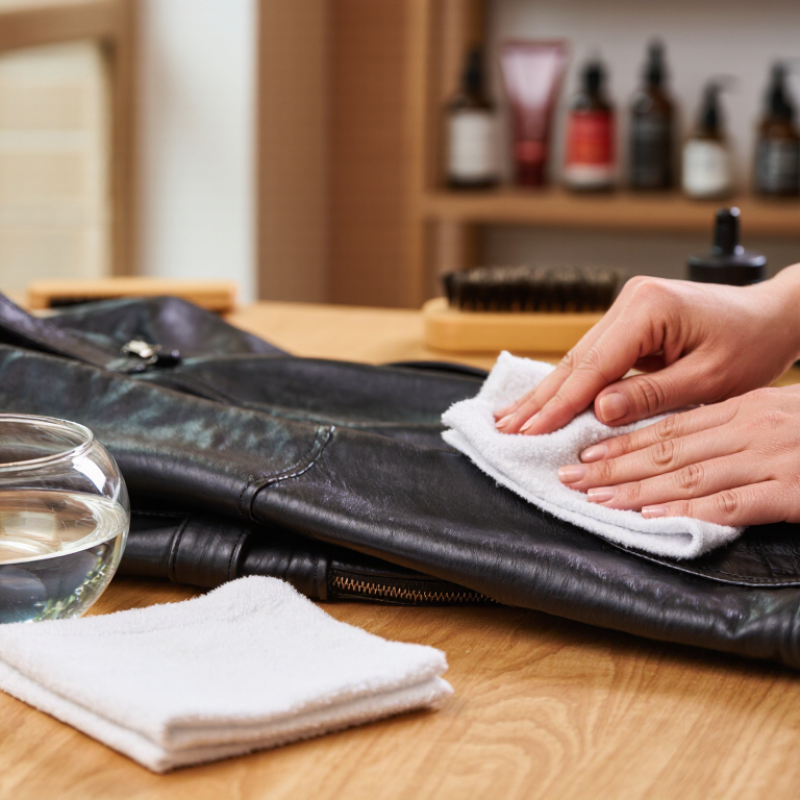
Before cleaning, check the care label and identify the leather finish. Suede and nubuck need different care, so avoid treating them like smooth leather. Lay the jacket on a clean towel and brush away loose dust with a soft, dry cloth. For surface grime, lightly dampen a microfiber cloth with cool water and wipe in small, gentle strokes. Keep the leather barely damp, not wet. Test any cleaner on a hidden spot first, then let the area dry fully before judging the result.

For a small stain, blot rather than rub. A drop of mild, leather-safe cleaner on a cloth may help, but follow its directions and use as little as possible. It is tempting to keep wiping until a mark vanishes; that can spread the stain or leave a lighter patch. Less is safer. Avoid household solvents, soaking, and direct heat from a radiator or hair dryer. For ink, oil, or a stain that persists, stop and ask a leather-care professional. Some marks are better left alone than made worse. After cleaning, let the jacket air-dry at room temperature, away from sunlight, and check for any change in color or texture.

How to Clean a Leather Jacket Without Ruining It

Remove surface dirt and treat stains gently. This guide shows suggested minutes for each step; timing varies with the stain and leather, so follow the care label.

Test any cleaner on a hidden area first. Use a soft cloth that is only slightly damp, blot rather than scrub, and let the jacket air-dry away from direct heat.

Clean the Leather Without Soaking or Scrubbing

Leather can look sturdy, but its finish may be sensitive to excess water and friction. Check the care label before cleaning, especially if the jacket is suede or nubuck. Those materials need different care. For smooth leather, begin with a clean, soft cloth and a small amount of cool water. Wring it out well; it should feel barely damp, not wet. You want to lift surface dust, not push moisture into seams. Never soak the jacket or scrub a mark in circles. That can dull the finish or spread dirt. Test any leather cleaner on a hidden spot first. Pause. Let the area dry fully and check for color change.

For a small stain, dab gently from its edge toward the center. Use a fresh part of the cloth as dirt transfers. If the mark persists, apply a little cleaner made for leather, following its directions. More product is not better. Blot away residue with a separate barely damp cloth, then let the jacket air-dry away from direct heat and sunlight. Don’t use a hair dryer; quick drying can leave leather stiff. It may feel slow, but restraint matters here. I’d rather leave a faint mark than scrub until the finish changes. For deep stains, peeling, or color transfer, stop and seek a leather-care professional.

How to Clean a Leather Jacket Without Ruining It - Clean the Leather Without Soaking or Scrubbing

Step What to Do What to Avoid Why It Matters
1. Check the care label Follow the jacket’s care instructions. If the label is missing, identify whether the surface is smooth finished leather, suede, or nubuck before cleaning. Do not assume every leather type can be cleaned the same way. Suede and nubuck have a napped surface and generally need different care from smooth finished leather.
2. Remove loose dust Hang the jacket and gently wipe its surface with a clean, soft, dry cloth. Avoid stiff brushes, abrasive pads, and vigorous rubbing. Gentle dust removal helps reduce the risk of scratching or scuffing the finish.
3. Test first Test any damp cloth or leather cleaner on a small, hidden area. Let it dry completely and check for color change or surface damage. Do not apply a new product to the whole jacket without testing it first. Leather finishes and dyes can react differently to moisture and cleaning products.
4. Wipe small marks For smooth finished leather, use a clean cloth that is only slightly damp. Blot or wipe the mark gently, working in small areas. If needed, use a leather cleaner suitable for the jacket and follow its directions. Do not soak the leather, scrub hard, or use household solvents, bleach, or strong detergents. Excess moisture and harsh products may stain, dry out, or damage leather.
5. Remove cleaner residue If the cleaner’s directions call for it, gently wipe the area with a separate clean cloth that is barely damp. Do not rinse the jacket under running water or leave wet cloths on the leather. Keeping moisture limited helps prevent water marks and excessive wetting.
6. Air-dry naturally Pat away surface moisture with a dry, soft cloth, then hang the jacket in a well-ventilated place at room temperature. Avoid direct sunlight, radiators, hair dryers, and other direct heat sources. Rapid or uneven heat can dry leather and may cause it to stiffen or become misshapen.
7. Get help for difficult stains For extensive staining, ink, oil, dye transfer, or delicate suede and nubuck, consult a cleaner experienced with leather garments. Do not try repeated home treatments or use stain removers not intended for the leather type. Some stains and leather finishes require specialized treatment to limit further damage.

Key rule: Keep cleaning gentle and localized—never soak or aggressively scrub a leather jacket.

Dry, Condition, and Store the Jacket Properly

After cleaning, let the jacket dry at room temperature. Blot moisture with a clean, soft cloth; do not twist or wring the leather. Keep it away from radiators, hair dryers, and direct sunlight, which can dry or stiffen the surface. Hang it on a broad, padded hanger so the shoulders keep their shape. I still find this step easy to rush, but slow drying is safer.

Tips: Check the care label before using conditioner. Test a small amount on a hidden area and let it dry fully; some products can darken leather. Use only a light coat, and avoid conditioning suede unless its care instructions allow it.

Once fully dry, store the jacket in a cool, dry place with room for air to circulate. A breathable fabric cover helps protect it from dust. Avoid sealed plastic bags and crowded closets, where trapped moisture or pressure can affect the leather. Empty the pockets, close the zipper loosely, and smooth out folded areas. Check the jacket every few months. If it feels dry or looks uneven, reassess its care needs rather than applying more conditioner automatically.

FAQS

Should I use the same cleaning method on every leather jacket?

No. Check the care label first. Suede and nubuck need different care from smooth leather.

How damp should the cloth be?

Use a clean, soft cloth with cool water. Wring it out until it feels barely damp, not wet. Pause.

What is the safest way to treat a small stain?

Dab from the stain’s edge toward its center. Use a clean part of the cloth as dirt transfers. Avoid circular scrubbing.

Should I test leather cleaner before using it?

Yes. Test it on a hidden spot, then let the area dry fully. Check for color change before continuing.

How should I dry the jacket after cleaning?

Blot moisture with a soft cloth, then air-dry it at room temperature. Keep it away from sunlight, radiators, and hair dryers. Slow is safer.

Can conditioner change the jacket’s color?

It can darken leather. Check the care label, test a small hidden area, and use only a light coat if allowed.

How should I store a leather jacket?

Hang it on a broad, padded hanger in a cool, dry place. A breathable fabric cover helps keep off dust. Avoid sealed plastic bags and crowded closets.

What should I do about deep stains or peeling?

Stop cleaning and seek a leather-care professional. I might be tempted to try one more wipe, but that can worsen the finish.

Conclusion

Learning how to clean a leather jacket without ruining it starts with identifying the leather and reading its care label, since different finishes may need different treatment. Before cleaning, empty the pockets, fasten zippers, and gently brush away loose dust. Test any cleaner or damp cloth on a small, hidden area first, then let the spot dry to check for changes in color or texture. For stains, blot gently rather than rubbing, and avoid harsh products that could damage the surface.

Clean the jacket with a soft cloth that is only slightly damp, working carefully and never soaking or scrubbing the leather. Afterward, let it air-dry naturally at room temperature, away from direct heat and sunlight. Once dry, apply a suitable leather conditioner sparingly to help keep the material supple, following the product directions. Store the jacket on a sturdy hanger in a cool, dry, well-ventilated place.

Liam

Liam

Liam is a dedicated marketing professional with a profound expertise in the industry, where he excels at highlighting the unique advantages of our core products. With a keen understanding of market trends and consumer needs, Liam frequently updates our company’s professional blog, providing......