Dressing for a semi-formal wedding in 2026 requires balance, not rigid perfection. Guests should look polished without appearing overdressed or competing with the couple. The invitation usually provides the clearest clue. Venue, ceremony time, season, and local customs also matter. So, what dress code is appropriate for a semi formal wedding? A tailored suit, dress shirt, and leather shoes usually work well for men. Women may choose a midi dress, refined jumpsuit, or elegant separates. Fabrics such as crepe, satin, wool blends, and linen can suit different temperatures. Avoid clothing that looks too casual, including distressed denim, athletic shoes, and graphic T-shirts. Small details matter.
A practical approach begins with the setting. A garden wedding may welcome lighter colors and comfortable loafers, while an evening hotel reception may call for darker tones and richer textures. Wedding planners and etiquette specialists generally recommend checking the invitation before making assumptions. That advice remains reliable, but it is not absolute. I have seen guests follow dress-code labels correctly and still feel uncomfortable because their shoes or layers were unsuitable. Fit, movement, and weather deserve equal attention. A compact umbrella, breathable undershirt, or low-heeled backup shoes can prevent avoidable stress. Keep accessories intentional. One memorable detail is often enough. Even so, semi-formal style leaves room for personality, and a slightly imperfect choice can look more natural than an overly calculated outfit.
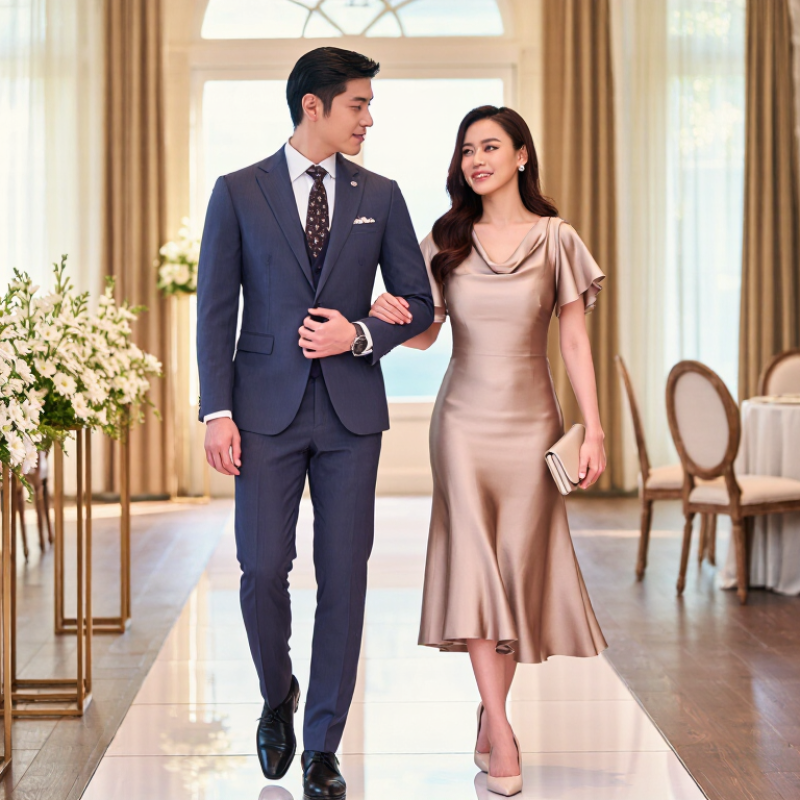
Semi-formal wedding clothing should look polished, but never overly ceremonial. The setting matters. A rooftop reception may suit a tailored suit, open-collar shirt, and leather loafers. A garden ceremony may call for a lightweight suit, midi dress, or refined jumpsuit. The Knot’s 2024 Real Weddings Study reported an average guest count of 117, so your outfit should remain comfortable through dinner, photographs, and dancing. Choose breathable fabric, secure footwear, and layers for changing temperatures.
For men, a navy, charcoal, or muted brown suit usually works well. A tie is optional, but the shirt should look intentional. For women, a knee-length or midi dress, tailored separates, or an elegant jumpsuit can fit the code. Avoid white, athletic shoes, distressed denim, and anything that resembles evening gala wear. The Wedding Report’s recent industry data shows that wedding spending remains substantial, which makes respectful guest dressing more important in formal venues. Still, spending more does not guarantee better style.
Read the invitation carefully. “Semi-formal” at noon can feel different from “semi-formal” at 7 p.m. I would rather be slightly restrained than visibly overdressed. Check the venue, weather, cultural customs, and wedding party colors before choosing accessories. Industry surveys provide useful patterns, not personal rules. That distinction deserves more attention.
Choosing the right outfit starts with the venue and season. For a garden wedding, choose a lightweight suit, midi dress, or tailored separates in soft colors. Linen blends feel comfortable, but they wrinkle easily. That can look relaxed, not careless. A city restaurant usually calls for darker colors, polished shoes, and cleaner lines. For beach ceremonies, breathable fabrics and low-profile footwear work better than heavy layers. Check the invitation carefully. The dress code may be flexible, but the location gives useful clues.
Tips: Match your fabric to the weather. Choose wool blends for cool evenings and breathable cotton or silk blends for summer. Carry a light jacket when temperatures may drop. Avoid athletic shoes, loud graphics, and overly casual denim. Test your outfit by sitting, walking, and raising your arms. Comfort affects confidence.
Seasonal details can make semi-formal clothing look intentional. Autumn welcomes deep green, warm brown, and textured fabrics. Spring favors lighter shades and subtle patterns. In winter, add a refined coat, but remove it indoors. I once underestimated an outdoor reception and spent the evening cold. It affected my mood more than expected. A small mistake? Yes, but useful. Fit remains more important than trend. Have sleeves and trousers adjusted before the wedding, especially when photos are planned.
For a semi-formal wedding in 2026, treat the invitation as guidance, not a costume. Daytime ceremonies suit sage, dusty blue, terracotta, or soft gray. Evening events allow deeper navy, plum, forest green, or charcoal. Black can work, but it may appear too severe in bright venues. The Knot’s 2024 Real Weddings Study reported an average guest count of 117, so choose colors that photograph well across crowded spaces and changing light.
Fabric controls comfort and polish. Wool blends, silk, linen blends, and structured viscose offer movement without looking casual. Textile Exchange’s Materials Market Report 2024 states that polyester represented about 59% of global fiber production. That figure makes fiber selection worth questioning. A fully synthetic suit may resist wrinkles, yet it can feel hot during outdoor vows. Check the lining, breathability, and fabric weight before focusing on appearance.
Silhouettes should follow the body, not erase it. Choose a softly structured jacket, mid-rise trousers, and a clean shoulder line. Avoid extreme oversized cuts unless the venue feels distinctly contemporary. For dresses, a tea-length or streamlined midi shape often fits semi-formal expectations. Test sitting, walking, and raising one arm. The outfit may look elegant while standing, but weddings involve movement. A slightly imperfect hem or relaxed sleeve can feel more authentic than constant adjustment.
A practical guide to coordinating color, fabric, silhouette, and seasonal comfort for semi-formal wedding attire.
| Style Element | Recommended Choices | Best Setting or Season | Why It Works | What to Avoid |
|---|---|---|---|---|
| Classic Dark Neutrals | Navy, charcoal, deep gray, or muted black | Evening weddings, autumn, and winter | Creates a polished appearance without being as formal as a tuxedo | A full black outfit with highly glossy accessories, which may look overly formal |
| Soft Neutrals | Stone, taupe, beige, light gray, or warm ivory | Daytime ceremonies, spring, and summer | Keeps the outfit light, refined, and appropriate for natural daylight | White or ivory as the dominant color when it could compete with the couple's attire |
| Muted Color Accents | Dusty blue, sage, lavender, muted rose, or terracotta | Garden venues, daytime events, and transitional seasons | Adds personality while remaining softer than vivid or neon shades | Neon tones, highly reflective colors, or head-to-toe bright outfits |
| Wool and Wool Blends | Lightweight wool, tropical wool, or wool blended with breathable fibers | Year-round, especially indoor receptions and cooler weather | Holds a clean shape, resists wrinkles, and offers a tailored finish | Heavy winter-weight cloth in hot or humid conditions |
| Linen and Linen Blends | Linen blended with cotton, wool, or another structure-preserving fiber | Outdoor weddings, beaches, spring, and summer | Breathable and comfortable in warm weather, with a relaxed formal character | Very rumpled fabric or an overly casual unstructured outfit |
| Cotton and Cotton Blends | Poplin, structured cotton, or cotton blended with stretch or wool | Warm-weather daytime celebrations | Lightweight, versatile, and easy to coordinate with tailored separates | Thin jersey, athletic fabric, or visibly casual cotton items |
| Tailored Suit | A matching two-piece suit with a clean jacket and trousers | Most semi-formal weddings, particularly evening events | Provides structure and polish while allowing a less formal shirt or accessory | Tuxedo details, tails, or an overly ceremonial evening look |
| Coordinated Separates | Tailored trousers with a complementary blazer or refined jacket | Daytime weddings and venues with a relaxed atmosphere | Looks intentional but less formal than a matching suit | Jeans, cargo trousers, distressed pieces, or visibly mismatched colors |
| Midi or Tea-Length Dress | A knee-covering to mid-calf dress with a defined waist or clean drape | Daytime, garden, and indoor receptions | Balances elegance, movement, and semi-formal restraint | Floor-length gala styling or extremely short party silhouettes |
| Jumpsuit or Tailored Set | A structured jumpsuit or coordinated top-and-trouser set in a dressy fabric | Modern venues, daytime events, and warm seasons | Offers a contemporary silhouette while maintaining a polished finish | Casual utility details, athletic materials, or excessive cutouts |
| Finishing Details | Leather or refined fabric footwear, minimal jewelry, a neat belt, and a compact evening or day bag | Adapt to the venue, time, weather, and walking requirements | Small, coordinated details make a simple outfit look deliberate | Beach sandals, sports shoes, oversized logos, novelty accessories, or visibly worn items |
How to Dress for a Semi Formal Wedding in 2026?
Semi-formal dressing depends on coordination, not expensive labels. The Knot’s 2024 Real Weddings Study reported an average US wedding size of 116 guests. That scale makes polished details noticeable. Choose clean leather or refined suede shoes in dark brown, black, or deep burgundy. Match the belt closely, but avoid forcing an exact color match. A subtle difference can look more natural.
Accessories should support the outfit quietly. A slim watch, textured pocket square, and simple cufflinks are usually enough. The Global Wellness Institute continues to report strong growth in personal wellness spending, reflecting greater attention to grooming and presentation. Still, grooming should look controlled, not heavily styled. Trim facial hair two days before the event. Freshen your haircut about one week ahead. This avoids the overly sharp, just-cut appearance. I sometimes prepare too carefully and lose comfort. That is worth reconsidering.
Tips: Test your shoes indoors before the wedding. Wear breathable socks. Keep one small comb and stain-removal wipe nearby. Choose accessories that repeat one color from your outfit. Avoid shiny metals when your clothing already has strong texture. Check your collar, cuffs, and shoe condition under daylight. A slightly imperfect pocket square may appear more relaxed than a rigid fold. However, wrinkled trousers still look careless. The Knot’s report also placed average US wedding spending at about $33,000, so respectful presentation matters without imitating formal eveningwear.
Coordinating shoes, accessories, and grooming details helps create a polished semi-formal wedding look without appearing overdressed.
This planning guide assigns practical preparation time to the main elements of a semi-formal wedding outfit. Clothing selection receives the largest share, while shoes, accessories, and grooming complete the overall presentation.
Semi-formal does not mean “wear anything polished.” It means balance. A dark suit, tailored trousers, or a refined midi dress usually works well. Avoid jeans, athletic shoes, and beach-style sandals. They can look careless in photographs. The Knot’s 2024 Real Weddings Study reported an average guest count of 117 in the United States. That matters. Your outfit should look appropriate in crowded rooms and outdoor ceremonies.
Fit causes more mistakes than color. Sleeves should stop near the wrist bone. Trousers should lightly touch the shoe, not pool around it. A dress should allow comfortable sitting. I once chose a beautiful jacket with stiff shoulders. It looked sharp for ten minutes. Then I could barely move. Comfort is part of good styling, although people often ignore it.
Check the invitation, venue, and forecast before dressing. A formal hotel needs cleaner tailoring than a garden reception. Choose breathable fabrics for heat. Add a lightweight layer for evening temperatures. Avoid white, unless the couple clearly permits it. Loud logos and excessive sparkle can pull attention from the ceremony. The ThredUp 2024 Resale Report projects the global secondhand apparel market could reach 350 billion dollars by 2028. Renting or rewearing quality pieces can support value-conscious dressing, but inspect every seam, hem, and button first. Small flaws show quickly.
Choose polished clothing without looking ceremonial. A tailored suit, midi dress, or refined jumpsuit usually works. The boundary remains slightly unclear.
Try a navy, charcoal, or muted brown suit. A tie is optional, but the shirt should look deliberate. Leather loafers or polished dress shoes complete the outfit.
Consider a knee-length dress, midi dress, tailored separates, or an elegant jumpsuit. Choose fabrics that allow sitting, walking, photographs, and dancing. Comfort matters more than chasing a perfect trend.
A garden setting suits lightweight fabrics and softer colors. A city restaurant usually favors darker colors and cleaner lines. Beach ceremonies work better with breathable clothing and low-profile shoes.
Yes. Spring supports lighter shades and subtle patterns. Autumn suits deep green, warm brown, and textured fabrics. Winter may require a refined coat outdoors.
Choose clean leather or refined suede shoes in dark, muted colors. A slim watch, simple cufflinks, or a textured pocket square is enough. Do not overload the outfit.
Avoid white, athletic shoes, distressed denim, loud graphics, and gala-style clothing. Also avoid anything that competes with the wedding party. Overdressing can feel as awkward as underdressing.
Carry a light jacket when the evening may become cool. Choose breathable socks and test your shoes indoors. I once underestimated an outdoor reception and felt cold all night.
Trim facial hair about two days before the event. Schedule a haircut roughly one week beforehand. Adjust sleeves and trousers before photographs. A slightly imperfect fold is acceptable. Wrinkled trousers are not.
Sit, walk, raise your arms, and wear the shoes for several minutes. Check collars, cuffs, and shoes in daylight. A beautiful outfit that restricts movement needs reconsideration.
Dressing for a semi-formal wedding in 2026 requires a balance between elegance and relaxed sophistication. If you are wondering what dress code is appropriate for a semi formal wedding, choose polished clothing that is more refined than everyday wear but less formal than black-tie attire. Consider the venue, time of day, and season when selecting your outfit. Lightweight fabrics and soft colors suit warm-weather celebrations, while richer tones and textured materials work well for cooler months or evening events. Dresses, tailored separates, jumpsuits, suits, and dress shirts with refined trousers can all be suitable when styled thoughtfully.
Complete the look with coordinated shoes, understated accessories, and well-groomed hair or facial hair. Your silhouette should allow comfortable movement while still appearing neat and intentional. Avoid overly casual items, athletic footwear, excessive sparkle, distracting patterns, or outfits that compete with the wedding party. The goal is to look confident, seasonally appropriate, and respectful of the celebration without appearing overdressed.

Díaz Fashion