A new wool coat can look worn before winter is over. Tiny knots gather beneath the arms, along the cuffs, and where a shoulder bag rubs. If you keep asking, “why does my wool coat keep pilling,” the answer is usually friction, loose fiber ends, and fabric construction—not proof that the coat is defective. Shorter fibers can work free and tangle on the surface. Even good wool can pill.
The Textile Exchange’s 2024 Materials Market Report estimates that global fiber production reached 124 million tonnes in 2023. That figure describes the wider textile industry; it does not measure how often wool coats pill. For fabric performance, ASTM D4970/D4970M outlines a Martindale method for assessing pilling, but a laboratory result cannot predict every coat’s wear. The Woolmark Company also provides wool-care guidance, including gentle handling and suitable tools for removing pills. Small details matter: a rough bag strap can keep rubbing the same patch, while an aggressive shaver can thin the cloth. Not ideal.
A named expert quotation should be checked against its original source before publication. I can’t verify a specific expert’s quote about coat pilling here, so I won’t invent one. This guide focuses on practical, evidence-conscious steps: reducing friction, removing pills carefully, and checking the care label before washing. The goal is not a perfectly untouched coat. It is a coat that stays presentable without losing its surface.
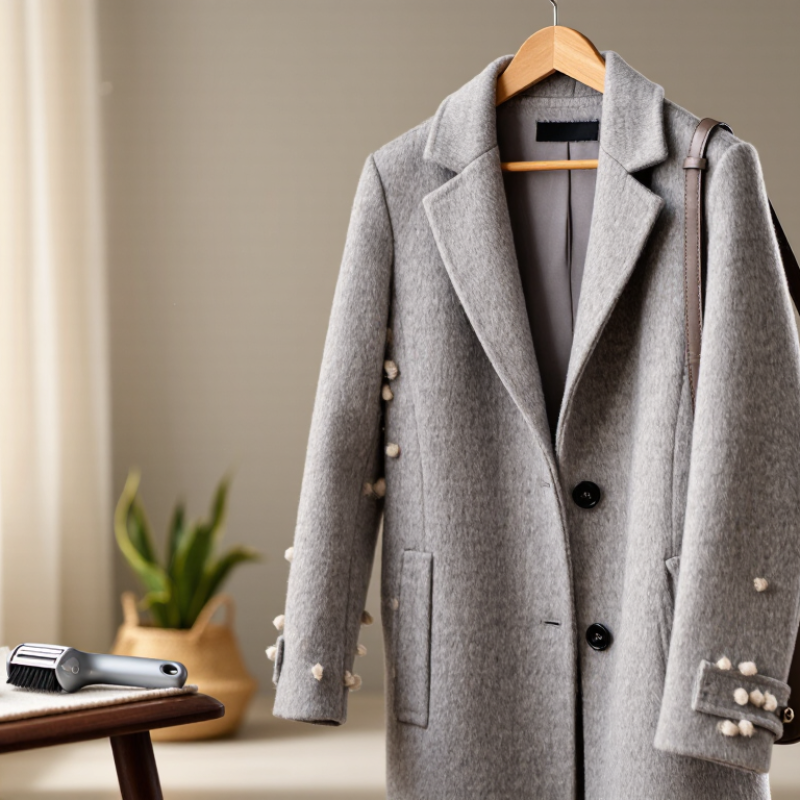
Wool coats pill when short, loose fibers work their way out of the yarn and tangle on the fabric surface. This happens more often in areas that rub repeatedly, such as under the arms, along the cuffs, and where a shoulder bag rests. The small knots are called pills. They can look untidy, but they do not automatically mean the coat is poorly made.
Wool fibers vary in length, and yarn construction affects how firmly they stay in place. Softer, loosely spun fabrics may release more fibers, especially during early wear. Friction then rolls those fibers into visible knots. A crowded commute can be enough: a coat sleeve brushing a desk, or a strap sliding across the shoulder, creates repeated abrasion. Even sitting in the same position can wear one patch more than another.
Notice where pills appear before changing how you care for the coat. That pattern often points to the source of friction. A smooth lining may reduce rubbing between layers, though it cannot prevent every pill. I used to assume frequent brushing would solve the problem; it can sometimes roughen delicate fibers instead. Go gently. Check the care label, and test any fabric tool on a hidden area. Pilling is frustrating, but a few knots are ordinary wear, not a verdict on the whole coat.
Understand why wool coats pill: loose fibers and repeated abrasion.
Wool fiber diameter varies by wool type; the ranges shown are approximate and are not a measure of pilling risk. Pilling occurs when loose surface fibers tangle under repeated friction. Reduce rubbing where possible, follow the coat’s care label, and gently remove pills with a fabric comb or suitable de-piller.
Before trying to prevent pilling, inspect where the coat rubs most. Check underarms, sleeve cuffs, side seams, and the area beneath a shoulder-bag strap. Small, soft knots often appear there first. Look closely. Run your fingers lightly over the cloth; rough patches can reveal repeated friction before pills become obvious. Notice your habits, too: carrying a tote on one shoulder or resting your elbows on a desk can wear one spot faster. This is easy to miss.
Read the care label before brushing, washing, or using a fabric shaver. Wool blends and lined coats may need different treatment, and the label may restrict water, heat, or agitation. Follow its instructions rather than treating every wool fabric the same. If gentle brushing is permitted, use a soft garment brush with light strokes, then stop if fibers lift. For a shaver, test a hidden area and keep the fabric flat. I once assumed a smooth-looking sleeve needed more work; it only made the surface look uneven. Store the coat on a broad hanger and avoid pressing it against rough bags. Pilling may still happen. That’s normal.
Wool pills form when loose fibers tangle under repeated friction. Areas beneath a crossbody strap, along the cuffs, and at the sides often show them first. Rotate coats between wears when possible, and avoid carrying rough bags against the same spot every day. A smooth lining can help, too. Less friction, fewer pills.
Brush the coat only when it is dry. Use a soft clothing brush, moving gently in the direction of the fibers. Pressing hard can roughen the surface, so start lightly and stop if the fabric looks disturbed. For stubborn pills, lift them carefully with a wool comb; don’t pull them by hand. I sometimes reach for a tool too quickly. A little patience is kinder to the cloth.
Follow the care label before cleaning. Many wool coats need professional care, while some can be hand-washed in cool water with a wool-safe detergent. Never wring the fabric; press water out with a towel and dry the coat flat, away from direct heat. Before storing it, make sure it is clean and fully dry. Hang structured coats on broad, sturdy hangers, and use a breathable cover rather than plastic. Leave space in the closet. Crowding can create new friction.
| How to Stop a Wool Coat from Pilling in 2026? — Prevent Pilling with Gentle Wear, Brushing, Cleaning, and Storage | |||
|---|---|---|---|
| Care Area | What to Do | Why It Helps | Useful Reminder |
| Gentle wear | Reduce repeated rubbing from shoulder bags, seat belts, rough scarves, and backpack straps. Rotate the coat with other outerwear when possible. | Pilling forms when friction loosens fibers and tangles them into small surface balls. High-friction areas are more likely to pill. | Check the underarms, cuffs, sides, and areas beneath straps regularly. |
| Careful brushing | Use a clean, soft clothes brush and make light strokes in the direction of the fabric. Brush only when the coat is dry. | Gentle brushing lifts away loose surface dust and fibers without the aggressive rubbing that can encourage more pilling. | Test on a discreet area first. Avoid stiff brushes and vigorous back-and-forth strokes. |
| Removing existing pills | Lay the coat flat and carefully lift pills with a fabric comb or fabric shaver designed for garments. | Removing pills can improve the coat’s appearance, but it does not prevent new ones from forming where friction continues. | Use light pressure and follow the tool instructions; do not pull pills by hand, as this can draw out fibers. |
| Washing and cleaning | Follow the care label. If it permits home washing, use a wool-safe method and avoid rubbing, twisting, or wringing the fabric. | Agitation, heat, and friction can damage wool fibers and may contribute to felting, shrinkage, or surface fuzz. | For structured or dry-clean-only coats, use a professional cleaner. Remove small marks promptly according to the care label. |
| Drying | After permitted hand washing, press out excess water with a towel and reshape the coat. Dry it flat away from direct heat. | Gentle handling helps limit stretching and friction while the wool is wet and more vulnerable to distortion. | Do not wring the coat or hang a heavy, wet wool garment to dry. |
| Storage | Store the coat clean and completely dry in a cool, dry place. Use a well-fitting hanger for a structured coat and allow room around it. | Clean, dry storage helps protect wool from moisture, odors, and pests; uncluttered storage also reduces crushing and rubbing. | For long-term storage, use a breathable garment cover rather than sealing damp clothing in plastic. |
| Care routine | After wearing, air the coat before storing it and inspect high-friction areas. Brush lightly only when needed. | Regular, gentle care can remove loose debris and help you spot friction-related wear before it becomes more noticeable. | There is no fixed brushing or cleaning schedule; follow the coat’s condition and care-label instructions. |
How to Stop a Wool Coat from Pilling in 2026?
Pills form when loose fibers tangle after rubbing against bags, seat belts, or neighboring fabric. For existing pills, lay the coat flat on a clean table and smooth one small area at a time. A wool comb works well on sturdy, closely woven cloth: hold the fabric gently taut and draw the comb in short, light strokes. For a fabric shaver, use its lowest setting and keep the head flat. Test inside the hem first. Stop if the surface snags or looks fuzzy. Go slowly. Chasing every tiny fleck can thin the fabric, and a slightly imperfect surface is safer than a bare patch.
Tips: Brush in one direction, away from seams and edges. Don’t pull pills by hand; that can loosen more fibers. Empty the shaver as needed so it cuts evenly, and avoid pressing down. Let the coat rest between passes.
Textile Exchange’s Materials Market Report 2024 estimates that global fiber production reached 124 million tonnes in 2023. That figure covers many fibers, not just wool, but it underscores the value of caring for garments already in use. Wool’s natural texture can make some pilling visible even with careful wear. Remove pills only when they bother you; the coat does not need to look factory-new to be well cared for.
How to Stop a Wool Coat from Pilling in 2026?
Pilling is caused by loose fibres tangling as fabric rubs against itself or other surfaces. On a wool coat, friction often builds under the arms, across the sides, and where a bag strap rests. To reduce it, limit repeated rubbing and follow the care label. A soft clothes brush can lift surface fuzz. Use a fabric shaver cautiously, on a flat area, and test an inconspicuous spot first. Too much pressure may damage the weave.
For a more objective comparison, ISO 12945-2 assesses fabric pilling, fuzzing, and matting with a modified Martindale test. Samples rub under controlled conditions, then trained assessors compare their appearance with reference photographs. The scale runs from Grade 5 to Grade 1. Grade 5 means no pilling; Grade 1 means severe pilling. Higher grades indicate better resistance in this test. A lab grade is useful, but it cannot predict exactly how a coat will look after years of wear.
Small details matter. A rough lining or daily shoulder bag can create local wear, even on fabric with a strong test result. I would not treat one grade as a promise. It is a controlled snapshot, not a guarantee for every wardrobe or routine. If loose pills appear, remove them gently rather than pulling them by hand. Pulling can loosen more fibres.
Loose fibers work out of the yarn and tangle into small knots. Repeated rubbing often causes them.
Check underarms, cuffs, side seams, and the shoulder area beneath a bag strap. Look closely.
Not necessarily. Fiber length, yarn construction, and friction all affect pilling.
Avoid letting a rough bag strap slide over the same spot. A smooth lining may help, but it cannot prevent every pill.
Read the care label before brushing or using a fabric shaver. Wool blends may need different care.
Lay the coat flat and gently hold the fabric taut. Use short, light strokes on sturdy, closely woven areas.
Test it inside the hem first. Keep the fabric flat and use the lowest setting.
No. Chasing each fleck can thin the fabric. I once kept brushing a sleeve and made it look uneven. Stop when the surface starts to look fuzzy.
Wool coats pill when loose fibers rise to the surface and repeated friction tangles them into small knots. If you have wondered, “why does my wool coat keep pilling,” check the areas that rub most often, such as the underarms, cuffs, sides, and places that meet a bag strap. Read the coat’s care label before cleaning, since different wool fabrics may need different handling.
To reduce pilling, wear and handle the coat gently, brush it with a suitable soft clothing brush, follow the care instructions when cleaning, and store it without crushing or rubbing against rough items. For pills that have already formed, carefully use a wool comb or fabric shaver, testing a discreet area first and avoiding excessive pressure. Results can be assessed with the ISO 12945-2 pilling scale: Grade 5 indicates no pilling, while Grade 1 indicates severe pilling.

Díaz Fashion