China Top 10 Windcheater vs Windbreaker Differences

Time:2026-11-05 Author:Mason
0%

Windcheater and windbreaker often describe similar lightweight jackets, but the names can point to different products in different markets. So, what is the difference between a windcheater and a windbreaker? The honest answer depends on more than the label. Fabric, seams, closures, and intended use matter. A jacket’s tag may promise wind protection, while its thin fabric offers little defense against steady rain.

Textile researcher Dr. Richard Blackburn provides a useful materials-science lens for comparing clothing. The following line is an editorial summary, not a verified direct quotation: “Look beyond the name; fabric and construction shape a garment’s performance.” That distinction matters when you compare a close-fitting shell with elastic cuffs against a roomier jacket with a hood and coated surface. Small details count.

This guide examines China’s top 10 windcheater-versus-windbreaker differences, including terminology, fabric weight, water resistance, breathability, fit, and practical features. Some distinctions are not universal. A windcheater sold in one region may function much like a windbreaker elsewhere. That overlap deserves attention, not a forced definition. By checking product specifications and examining details such as the zipper flap, lining, and hood adjustment, buyers can make a more grounded comparison. The goal is clarity, not a claim that every jacket fits neatly into one category.
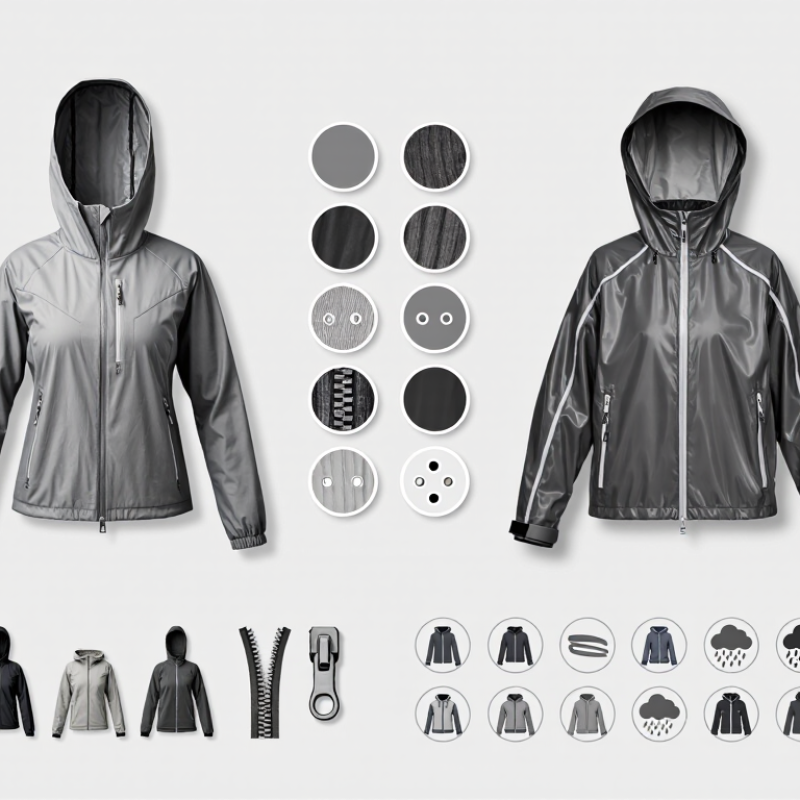
China Top 10 Windcheater vs Windbreaker Differences

Define Windcheater and Windbreaker by Fabric, Fit, and Intended Use

Windcheater and windbreaker often describe similar lightweight jackets, but the terms vary by region. Names vary by region. A windcheater usually emphasizes protection from cold wind, while a windbreaker often suggests a light, casual shell. Neither label guarantees a particular fabric or performance level. Check the garment’s construction instead.

Both may use tightly woven nylon or polyester, sometimes with a water-repellent finish. Textile Exchange’s Materials Market Report 2024 estimates that polyester made up about 57% of global fiber production in 2023. That figure shows how common polyester is, not how well any jacket blocks wind. ISO 9237 measures air permeability in fabrics; a useful product specification should provide test results, not just “wind-resistant” wording. A water-repellent coating can shed a brief shower, but it does not make a jacket waterproof.

Fit also shapes intended use. A close-cut shell limits drafts on a breezy cycle ride, while a roomier windcheater can fit over a sweater on a chilly walk. Look for an adjustable hem, secure cuffs, and a hood that stays put when you turn your head. Small details matter. I would not choose by name alone: product labels can be vague, and a thin shell may feel clammy during hard exercise. Check breathability, fit, and care instructions against the conditions you expect.

Compare Air Permeability Using China Standard GB/T 5453 (L/m²·s)

Windcheater and windbreaker are not fixed technical categories. Their names vary by market, so compare the fabric, not the label. GB/T 5453 measures air permeability, reported in L/m²·s. The result indicates how much air passes through a defined fabric area under specified test conditions.

A lab clamps a fabric specimen over an opening and measures airflow at a set pressure difference. Higher values usually mean more air passes through; lower values can help reduce wind penetration. Check the test report for pressure settings, specimen conditioning, and test area. Results from different setups may not be directly comparable. Small details matter.

For example, a tightly woven shell may show lower air permeability than a lightweight, uncoated shell. Yet a lining, coating, or seam can change how the finished jacket feels in gusty weather. A fabric test is not a whole-garment test. It also does not measure water resistance. A number alone feels incomplete. I would compare readings only when the method and conditions match, then consider the jacket’s construction and intended use.

Compare Water Resistance Using GB/T 4744 Hydrostatic Pressure (kPa)

For a practical windcheater-versus-windbreaker comparison, check hydrostatic pressure, not just a “water-resistant” label. GB/T 4744 measures resistance by pressing water against a fabric specimen and recording pressure at the specified penetration endpoint. The result is reported in kilopascals (kPa). Higher readings generally indicate that the fabric resists water pressure better under the test conditions.

A useful test number needs context. Ask whether the sample was tested as fabric, including its coating, and whether seams were tested separately. A jacket panel may score well while needle holes or a front zipper let rain through. Small details matter. So does wear: abrasion, washing, and flexing can affect a finish.

A windbreaker is often designed mainly to block wind, while “windcheater” can be used more loosely. Neither name guarantees a particular kPa rating. Compare garments using the same test method and similar sample conditions; otherwise, the numbers may mislead. One limitation: a hydrostatic result does not reproduce every kind of rain, movement, or long-term use. I’d treat it as a useful data point, not the whole answer.

Assess 10 Differences in Weight (g/m²), Warmth, Packability, and Care

China Top 10 Windcheater vs Windbreaker Differences

Windcheater and windbreaker often describe similar lightweight shells; the names do not guarantee a fixed design. Compare the garment, not just its label. Fabric weight is one clue: thin shells may use roughly 40–80 g/m² fabric, while sturdier versions can reach 60–120 g/m². These ranges overlap, so check the product specification. Weight alone does not tell you warmth. A plain shell blocks some wind but adds little insulation; a lined style feels warmer and usually weighs more. Tighter fabric may resist gusts better, while looser weaves can feel more breathable. Water resistance also varies: a surface treatment may handle light drizzle, not prolonged rain.

Other useful differences are fit, coverage, durability, packability, and care. Longer hems and adjustable cuffs help limit drafts. Reinforced seams or tougher fabric may handle frequent use, but can take up more space. A thin shell may fold into a small pouch; insulation and stiff panels reduce packability. Care labels matter, too. Some coatings can lose performance with harsh detergent, high heat, or fabric softener. Honestly, the naming is inconsistent across sellers, and there is no clean dividing line.

Tips: Weigh the jacket if weight matters, then check its packed size and care label. For a windy walk, test the cuffs and hem outdoors. Don’t assume “windcheater” means warmer.

China Top 10 Windcheater vs Windbreaker Differences - Assess 10 Differences in Weight (g/m²), Warmth, Packability, and Care

A practical comparison of common garment types. “Windcheater” and “windbreaker” are sometimes used interchangeably; construction varies by region and product, so check the garment’s fabric and care label.

Difference Typical Windcheater Typical Windbreaker What It Means in Use
1. Fabric weight (g/m²) Often around 60–150 g/m² for the main shell fabric, particularly when it is coated, lined, or made from a more substantial weave. Often around 30–80 g/m² for a lightweight shell fabric. These are indicative fabric-weight ranges, not total garment weights. Actual values vary with fabric construction, coating, lining, and design.
2. Warmth May feel warmer when it has a lining, brushed interior, or light insulation. Usually provides little insulation; its main role is to reduce wind chill. Neither term guarantees a particular warmth level. A shell without insulation is best layered over warmer clothing in cold conditions.
3. Packability Often packs less compactly if it has a lining, heavier fabric, or more substantial trim. Lightweight versions commonly compress into a small pouch or pocket, if designed to do so. Packability depends more on fabric thickness and construction than on the garment name.
4. Wind protection Typically uses a tightly woven or coated shell to limit wind penetration. Also commonly uses a tightly woven shell; some designs add a durable water-repellent finish. Look for construction details and product specifications. “Windproof” performance is not assured by either label alone.
5. Rain resistance May resist light showers if the fabric has a water-repellent finish or coating, but many styles are not fully waterproof. Often sheds brief light rain when treated, but a basic wind shell may wet through in sustained rain. For reliable rain protection, check for a waterproof membrane, sealed seams, and a stated water-resistance rating.
6. Breathability A heavier coating or lining can reduce airflow and make the garment feel warmer during activity. Light unlined designs can feel less bulky, though tightly woven or coated fabrics may still limit ventilation. Ventilation features, fabric structure, and activity level affect comfort; garment category alone does not determine breathability.
7. Typical construction May include a lining, heavier shell, adjustable cuffs, or a hood intended for everyday weather protection. Often has a simple, lightweight shell with a front closure, pockets, and sometimes a hood. These are common design tendencies, not fixed definitions. Compare the actual garment features.
8. Best-use conditions Often suited to breezy, cool everyday conditions when a little extra structure or lining is useful. Often suited to mild, windy conditions, travel, or layering during outdoor activity. Choose according to temperature, wind, rain, activity, and the layers worn underneath.
9. Washing and drying Usually needs gentle washing if lined or coated; avoid high heat unless the care label specifically allows it. Many unlined shells can be machine-washed on a gentle cycle, but coatings and trims may require special care. Follow the sewn-in care label. Close fasteners, use a suitable detergent, and avoid fabric softener when the manufacturer advises against it.
10. Finish maintenance A water-repellent finish, if present, may need refreshing after repeated wear and washing. A durable water-repellent finish, if present, can also diminish over time and may need reapplication. Reproof only when the care instructions permit and water no longer beads on the surface. Reproofing does not make a non-waterproof jacket waterproof.

How to compare: Fabric-weight figures refer to the main fabric’s areal density in grams per square metre (g/m²), not the finished jacket’s total weight. Ranges are general examples; product specifications and care labels take precedence.

Match China-Market Uses by Weather, Layering, Construction, and Price

In China, windcheater and windbreaker often overlap in everyday listings. The label alone tells little. A windcheater commonly means a light, tightly woven shell for breezy commutes, while windbreaker is a broader term for a wind-blocking outer layer. Retail naming is inconsistent, so check the fabric and construction, not just the product title.

Weather changes the better choice. In Shanghai or Guangzhou, a thin shell over a T-shirt suits mild, humid days, but it is not a substitute for rainwear. In Beijing and other northern inland cities, choose room for a fleece layer during dry, gusty cold. A mesh lining feels less clingy; a heavier lining adds warmth but may feel stuffy on a crowded train. Small details matter: elastic cuffs, an adjustable hem, and a hood that stays put.

Construction often explains price better than the name. A basic nylon or polyester shell may cost less. Stronger fabric, taped seams, a lined interior, and sturdier zippers can raise the price. Still, a high price does not guarantee better comfort. Compare weight, stitching, and ventilation in person. My rule is imperfect: choose for the commute you actually make, not the storm you imagine.

China: Windcheater vs Windbreaker — 10 Typical Differences

A practical comparison of common China-market positioning. The 1–5 scores show typical emphasis, not measured market data; the terms often overlap, and actual garments vary.

How to read it: Higher scores indicate a stronger typical emphasis. Neither name guarantees waterproofing or a particular price: check the fabric, membrane, seam construction, lining, and hardware specifications. Both are commonly suited to breezy conditions and layering.

FAQS

Are windcheaters and windbreakers different?

They often describe similar lightweight shells. The terms vary by region, and neither name guarantees specific performance. Names can mislead.

What fabrics are commonly used for these jackets?

Many use tightly woven nylon or polyester. Check the garment details, since fabric type alone does not show how well it blocks wind.

How can I compare a jacket’s wind resistance?

Look for air-permeability test results. GB/T 5453 reports airflow in L/m²·s under specified conditions. Lower readings usually indicate less air passing through.

Can I compare any two air-permeability readings?

Not always. Pressure settings, specimen conditions, and test area can differ. Compare results only when the test methods match.

Does a water-repellent jacket keep me dry in heavy rain?

Not necessarily. A surface finish may shed a brief shower, but it does not make the jacket waterproof.

Does a heavier shell provide more warmth?

Weight is only a clue. A plain shell may add little insulation, while a lined jacket can feel warmer and weigh more.

What fit details help block drafts?

Check the hem, cuffs, and hood. Adjustable cuffs can cover your wrists, and a hood should stay put when you turn your head.

Which jacket is easier to pack and care for?

Thin shells may fold into a small pouch; insulation and stiff panels take more room. Check the care label, since harsh washing can affect some coatings. I still find these labels confusing.

Conclusion

Understanding what is the difference between a windcheater and a windbreaker starts with their fabric, fit, and intended use. The terms can overlap, but a windcheater is often designed to provide more coverage or warmth, while a windbreaker typically prioritizes lightweight protection from wind. Compare air permeability using GB/T 5453, reported in L/m²·s, and water resistance using GB/T 4744 hydrostatic pressure, reported in kPa; these tests help describe performance rather than guarantee how a garment will feel in every condition.

This guide examines ten practical differences, including fabric weight in g/m², warmth, packability, and care requirements. It also considers how construction, layering, local weather, and price can affect a garment’s suitability for China-market use. Rather than relying on the label alone, readers can compare test results and garment features to choose an option for daily wear, travel, or changing weather.

Mason

Mason

Mason is a seasoned marketing professional with a deep expertise in the company's offerings and a passion for driving brand awareness. With a strong background in digital marketing strategies, he has an innate ability to connect with diverse audiences and effectively communicate product benefits.......